Search Posts
ERPCorp SAP FICO Blog
- Category: Blog
- Hits: 1005
SAP Controlling 2026 Topic Highlight
Product costing remains one of the most critical—and often misunderstood—areas of SAP Controlling. As organizations move to SAP S/4HANA, finance and controlling teams are discovering that while the technology has evolved, the need to understand how costs flow through the business has never been more important.
- Category: Blog
- Hits: 1232
Controlling 2026 Topic Highlight: Explore how SAP Business AI, Situation Handling, Advanced Financial Closing, and intelligent automation are helping finance teams close faster, analyze smarter, and work more proactively.
Read more: SAP Joule, AI, and Intelligent Automation: The Future of SAP Controlling
- Category: Blog
- Hits: 1311
Organizations today face constant change. Mergers and acquisitions, organizational restructuring, shared service initiatives, new business models, and evolving reporting requirements all place increasing demands on finance and controlling teams. As companies transition to SAP S/4HANA, the challenge is no longer simply implementing new technology, it is ensuring that finance processes can adapt quickly while maintaining reporting integrity, operational efficiency, and business transparency.
- Category: Blog
- Hits: 2098
Profitability analysis in SAP S/4HANA is undergoing one of the most significant transformations finance organizations have seen in years. As companies modernize their SAP landscapes, many are reevaluating long-standing CO-PA models, exploring Margin Analysis, and preparing for the broader impact of Universal Parallel Accounting on profitability reporting and valuation management.
Read more: Controlling 2026: Modernizing Profitability Analysis in S/4HANA
- Category: Blog
- Hits: 3501
The future of SAP Controlling is evolving rapidly and SAP Controlling 2026 is where you’ll see it all come together.
From groundbreaking innovations like Universal Parallel Accounting to the shift toward real-time, event-based processing and deep dives into core Controlling design, this year’s conference is packed with sessions that go beyond theory and deliver real, practical value.
Here’s an exclusive first look at three standout sessions you won’t want to miss.
Read more: Sneak Peek: What’s Coming to SAP Controlling 2026
- Category: Blog
- Hits: 3270
 Before diving into advanced topics like the Material Ledger and Actual Costing, every SAP professional must first understand the fundamentals of Product Costing. Without a solid foundation in how standard costs are created and managed, it’s impossible to successfully implement or analyze actual costing results. This session provided a deep look at the building blocks of SAP Product Costing—from master data and configuration to cost estimates and the logic behind valuation variants.
This blog is based on a presentation by Dawn Watts at the SAP Controlling Conference.
Read more: Introduction to SAP Product Costing – A Foundational Jump Start
- Category: Blog
- Hits: 2980
 Product costing in SAP can feel complex, but the core logic is simple: establish a standard cost, record actual activity as work progresses, and analyze the variance. Every step—issuing components, booking labor, confirming machine time—creates a journal entry. If you understand those postings and how they flow, you’ll capture the right signals without losing critical information.
This blog is based on a presentation by Richard Russman at the SAP Controlling Conference.
- Category: Blog
- Hits: 3011
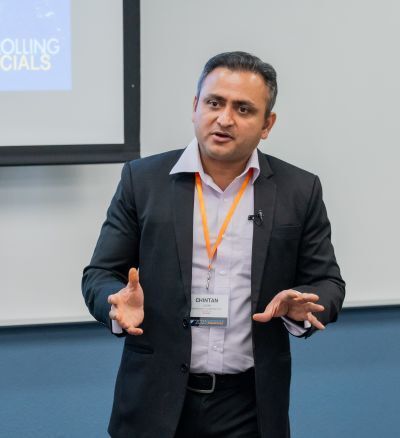 In SAP Controlling, cost allocation has always been fundamental. It’s the process of fairly distributing indirect costs—expenses that can’t be directly tied to a product, service, or project—across cost centers, profit centers, or business segments. These allocations ensure accurate product costing, meaningful profitability analysis, and compliance with financial reporting standards such as US GAAP, where shared costs must be absorbed into inventory valuations.
This blog is based on a presentation by Chintan Joshi at the SAP Controlling Conference.
Read more: Universal Allocation: March Towards Optimizing the Universal Journal
- Category: Blog
- Hits: 3597
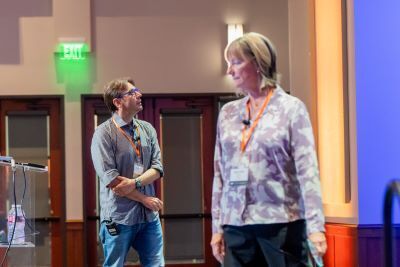 In SAP Controlling, cost components may seem like a technical detail—tucked away in the configuration layers of the system. But in reality, they are one of the most critical design elements in both product costing and cost center accounting. As the presenters emphasize, getting them right from the start is essential. If the structure is mis defined, it will affect everything downstream—from activity prices to margin analysis—creating headaches that ripple through your entire cost flow.
This blog is based on a presentation by Marjorie Wright & Rogerio Faleiros at the SAP Controlling Conference.
Read more: The power and purpose of cost components in S/4HANA Controlling
- Category: Blog
- Hits: 2768
 If you’ve ever felt that SAP reporting lives “somewhere else”—in spreadsheets, data lakes, or BW—you’re not alone. Many teams still export data because traditional reports can feel fragmented or too technical. Embedded Analytics in SAP S/4HANA changes that by putting trustworthy, drillable insights right where you work. And with the new Review Booklets, the experience becomes faster, more guided, and easier to adopt across finance and controlling.
This blog is based on a presentation by Sebastian Doll at the SAP Controlling Conference. Sebastian is the Head of Product Management for Management Accounting and Revenue Recognition at SAP Cloud ERP.
Read more: Unlock the Power of Embedded Analytics with Review Booklets
